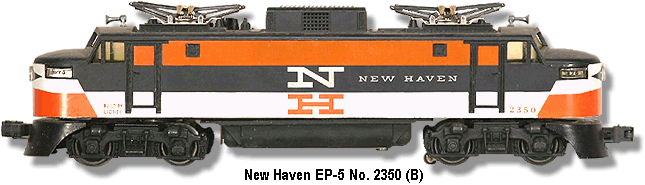
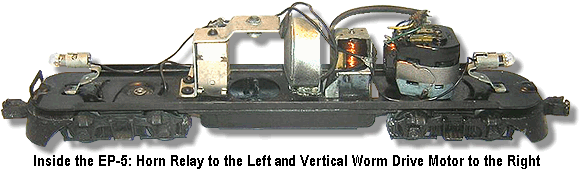
 The EP-5 was introduced in 1956, and was a credible copy of the General Electric EP-5 rectifier, which ran on the New Haven Railroad. Lionel erroneously called this engine "Little Joe." This Lionel engine came with a single motor and four instead of six-wheel trucks that the prototype had, but otherwise it was enhanced with Lionel’s best features. The EP-5 was introduced in 1956, and was a credible copy of the General Electric EP-5 rectifier, which ran on the New Haven Railroad. Lionel erroneously called this engine "Little Joe." This Lionel engine came with a single motor and four instead of six-wheel trucks that the prototype had, but otherwise it was enhanced with Lionel’s best features.

The New Haven No. 2350 was in production for three years (1956-58) and during this period Lionel had problems in painting the complex colored pattern on the front of these engines. This resulted in a major variation where they painted the side "N" orange and the "H" black. Also, stresses placed upon the body through handling caused cracks at the ends where the body was attached to the chassis. These problems were partially illeviated when Lionel made a front adhesive decal that at least would cover up the damage. This decal has been applied to many of these units over the years and engines with pristine painted ends are hard to find. Beware of reproduction or repaints of the rare variation that will have the letters silk screened on. All of the original shells will show evidence of heat-stamped letters which is what Lionel used on all of these engines.
There are no numbers in the number boards, however, Lionel painted their production number on the side of each of these units. All of the engines that Lionel made of these are highly sought after by collectors today. See the Numerical Index for additional details about the individual engines in this class.
|


 uring the post-war period Lionel produced four types of electric locomotives. We are not including the No.
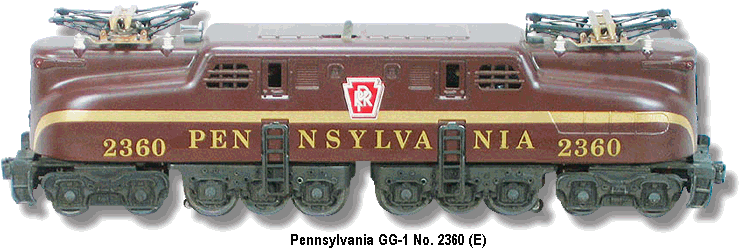

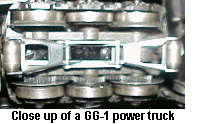
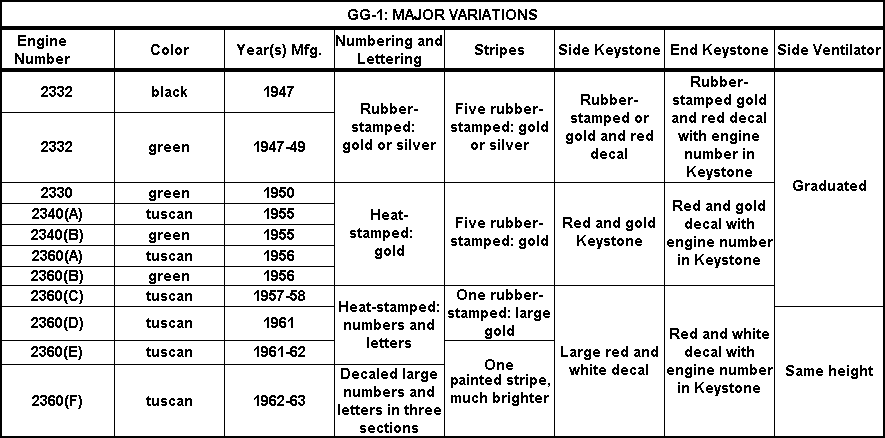
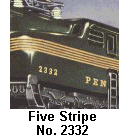 Lionel’s GG-1 was based on the Raymond Loewy’s innovative design for the Pennsylvania Railroad’s long-lived prototype. It was first introduced with the single motored No. 2332 in 1947. Lionel scaled down the length of this engine and removed the flanges on the center driving axles so that it would be able to negotiate their 31 inch diameter
 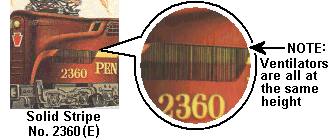 Another problem was the color of the striping. Although Lionel produced these originally with GOLD striping, oxidization and a chemical reaction to the overcoat that they used caused this striping to turn BLACK and sometimes SILVER. Engines that have been found new in the box show the original color to be GOLD, but they also show faded central striping.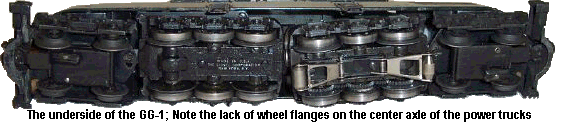



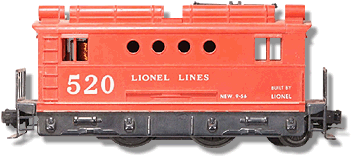
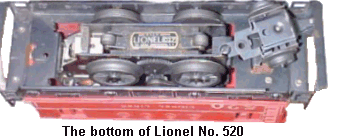
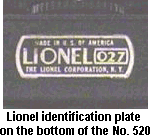
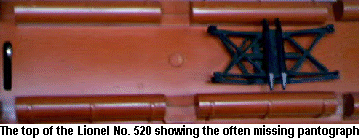
 The Lionel Lines 80-Ton Box Cab was made without any of Lionel’s premium features for the more economical O27 Scale train sets beginning in 1956. The moulded plastic pantograph is particularly vulnerable to damage, and because it is easily removed this piece is often found missing today. Being in production only two years, this electric locomotive is undervalued today due to the lack of demand by collectors. See the
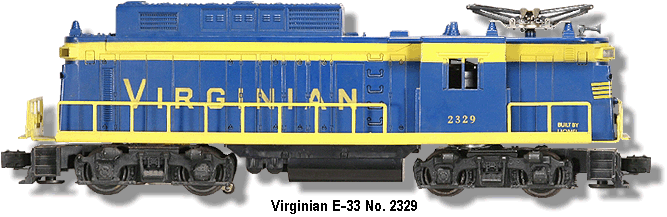
 The Virginian E-33 Rectifier is highly prized by collectors today. Lionel made only one of these with the striking BLUE and YELLOW colors of the Virginian Railroad. Lionel produced this engine only two years during the post-war period: 1958-59. Not particularly attractive engine, the prototype was designed to haul lengthy coal loads over the Appalachian mountains, which was not a glamourous job to begin with.
 520 Lionel Lines 80-Ton Box Cab


